Accidents or injuries
Check when eligible injuries can first be covered. Do not assume that an accident has no waiting period or that every knee problem follows the accident rule.

A waiting period is the time that must pass before a particular benefit can cover eligible new conditions. Accident, illness and condition-specific waits can differ. Paying for a policy does not mean every benefit starts immediately—and filing a claim later does not make a problem that began during the wait eligible.
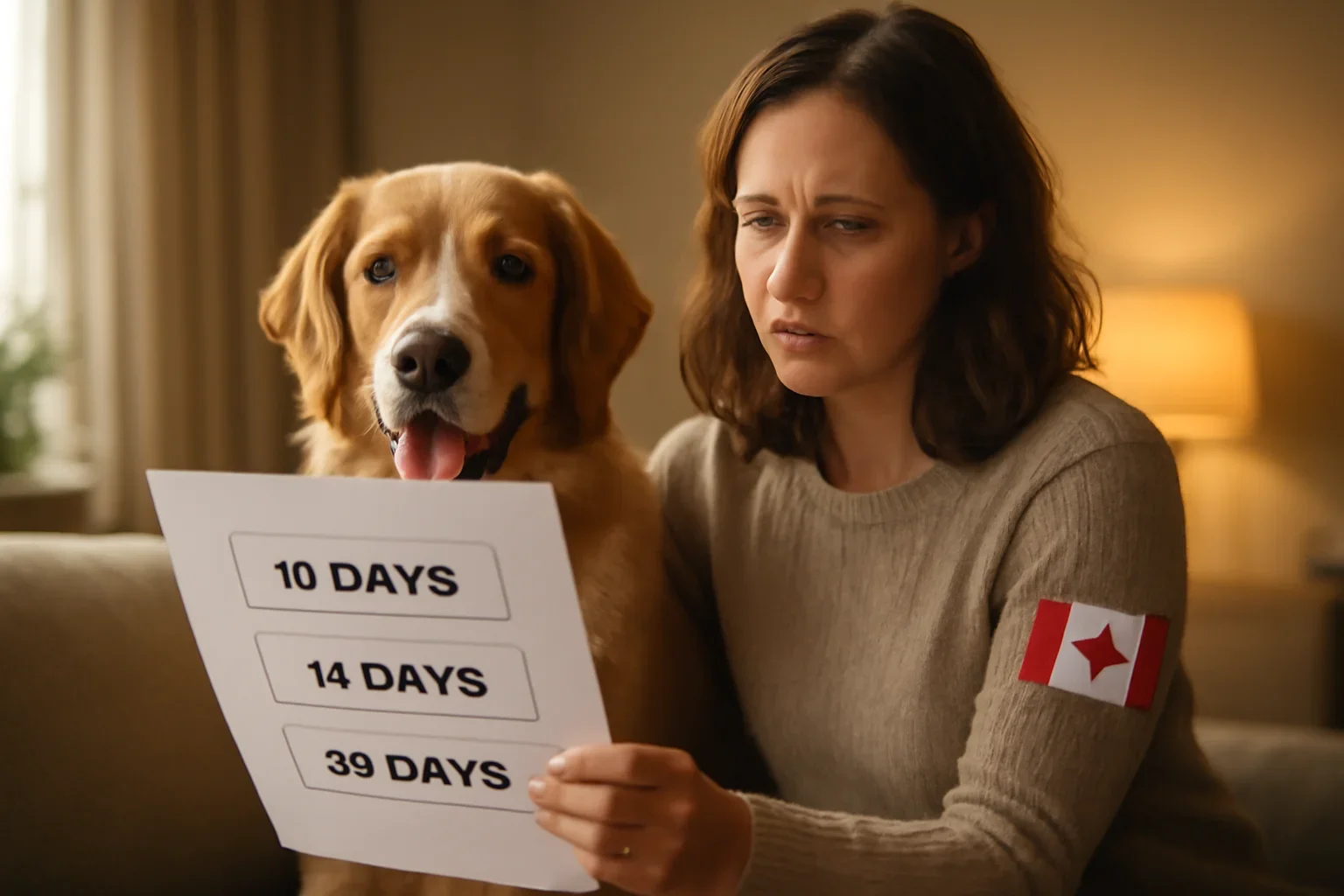
Check when eligible injuries can first be covered. Do not assume that an accident has no waiting period or that every knee problem follows the accident rule.
Illness benefits may start later. Ask how the insurer assesses signs that appeared before the benefit became available.
Some contracts have separate waits for conditions such as cruciate ligament problems. Check the exact category rather than using a general accident or illness countdown.
If your pet needs care now, contact a veterinarian. Do not postpone needed assessment to reach an insurance start date. Ask the clinic about estimates and payment arrangements while you check your current policy.
Our guide to how pet insurance works explains the other steps between enrolment and reimbursement.
| Provider | Published standard timing | What to confirm |
|---|---|---|
| Furkin | 48 hours for accidents; 14 days for illnesses; 180 days for cruciate ligament conditions. | Its FAQ states the waits begin at 12:00 a.m. on the policy effective date. Request the exact end dates for your policy. Furkin FAQ. |
| Trupanion Canada | Five days for injuries and 30 days for illnesses in its standard Canadian FAQ. | The page says effective dates can vary by location. Confirm your province, policy and any valid offer. Trupanion coverage-start guidance. |
| Fetch Canada | Its public Canadian summaries differ. One describes up to 15 days and a separate orthopedic wait; another describes no accident wait and a 15-day illness wait. | Do not use either summary as a confirmed start date. Ask for the current schedule and condition-specific rules attached to your quote. |
Fetch sources showing the difference: waiting-period FAQ and Canadian coverage overview. The difference may reflect product or wording changes; these pages alone do not establish which terms apply to a particular pet.
These examples are not a complete market comparison or a recommendation based on the shortest wait. Compare exclusions, deductibles and benefit limits too.
An insurer may review when a problem first showed signs, not only when it was diagnosed or treated. A condition that begins during a waiting period may be excluded as pre-existing under the contract, including for later related care.
Suppose a policy has a 14-day illness waiting period. A pet first shows signs on day 10 and has a veterinary appointment on day 18. The later visit does not automatically make the illness eligible. The insurer must assess the history against the policy wording.
This is a hypothetical timeline, not a decision about a real pet. Do not use it to calculate your own policy’s exact start time.
Trupanion Canada’s pre-existing-condition guidance explains why earlier signs and records can matter. Ask your insurer to identify the relevant clause and records if eligibility is unclear.
The waiting period concerns when eligible coverage can begin. A submission deadline concerns how long you have to send claim documents. Holding an invoice until later does not change when the condition began or when treatment took place.
Use our claims process guide to organize invoices and records without missing the submission deadline.

A quote date, payment date and policy effective date may not be identical. Ask the insurer to resolve any mismatch before relying on cover.
“Please confirm the exact date and time each benefit becomes available under my policy, including any condition-specific waits. Please also confirm how conditions first showing signs during those periods are assessed and whether an approved waiver changes these dates.”
Some qualifying offers waive standard waits, but eligibility, activation and exclusions still matter. A shorter wait is not the same as retroactive coverage for an existing problem.
For example, Trupanion’s Canadian Go Home Day offer describes waiving standard waits for eligible new pets when activated. Do not assume every adoption, breeder handover or veterinary visit includes that offer.
If you receive an offer, verify its activation deadline, start time, duration and continuation steps directly with the insurer. An examination alone does not prove a waiver has been approved.
Ask whether a new application, lapse, reinstatement or benefit upgrade brings new waits or exclusions. Do not cancel existing cover based only on a new quote. Confirm acceptance, start dates and treatment of medical history first.
Continuous renewal is a different situation from a new application. Check your renewal notice rather than assuming either that every wait restarts or that no changed benefit can have new conditions.
For a newly adopted pet, keep the adoption records and any offer certificate together. If your first appointment is at a different clinic from the one that issued an offer, confirm activation directly with the insurer rather than assuming records have transferred.
If a plan requires an examination or waiver form, ask about available appointments and the document deadline before planning a trip into Saskatoon. A future appointment booking is not confirmation that the insurer has waived a wait.
Use your actual home province when requesting policy terms, even if you visit a clinic across the river. Ask which coverage-start rules apply to your issued policy and how to provide records from both clinics.
Know how to contact your regular clinic and where it directs urgent after-hours cases. Confirm payment requirements with the clinic you will attend. A direct-billing service cannot make an ineligible waiting-period expense covered.
These are planning scenarios, not claims about local appointment availability, disease risk or special provincial waiting-period laws.
Check what is covered after the wait ends, how earlier symptoms are treated and what you would pay on a claim. Keep the premium, deductible, reimbursement rate and benefit limits beside the timing details.
It is the period that must pass before a particular benefit can cover eligible new conditions under the policy.
Not necessarily. Check the effective date and separate benefit waiting periods. Payment alone does not confirm immediate eligibility.
Often they differ. Some policies also set separate waits for named conditions.
A new policy should not be expected to pay for an already-existing problem. Ask about eligibility and exclusions, and arrange needed care with your veterinarian.
The earlier signs can affect eligibility. A later diagnosis does not automatically make the condition new for insurance purposes.
Submitting later does not change the treatment or onset dates. The insurer assesses the expense under the policy’s timing and exclusion rules.
No. Check the named conditions, duration and any approved waiver process in the specific contract.
Only where the insurer offers and approves a qualifying waiver. Confirm the form, examination timing and approval requirements.
Check the renewal terms. Continuous renewal is different from a new policy, reinstatement or benefit change.
Do not assume it will. Ask about transfer rules, new waits and treatment of existing medical history before cancelling cover.
No. It changes how an approved amount is paid, not whether the condition or expense qualifies.
Request the current policy wording and a written schedule for your province, pet and product. Do not rely on the shortest figure from a general webpage.
Ask for the actual start dates and exclusions attached to your quote. If your pet already needs care, work from your current policy and your veterinarian’s advice.
A quote is not confirmation of immediate coverage.
Sources checked: 30 August 2026. Official Canadian insurer resources are linked beside the information they support. Conflicting Fetch summaries are flagged rather than resolved without policy evidence.
This is a document-based guide, not a claim approval or veterinary advice. No firsthand claims testing, professional review or local service survey is claimed. The example is hypothetical; your issued policy and approved endorsements control.